
the No1 Google Ranking Luxury Property Magazine
London House Rents Surge 67% In First Half Of 2026
21.09.26The prime rental landscape across Central London has decoupled from the wider domestic housing market, posting extraordinary price spikes driven by a severe shortage of turnkey stock and an influx of international wealth.
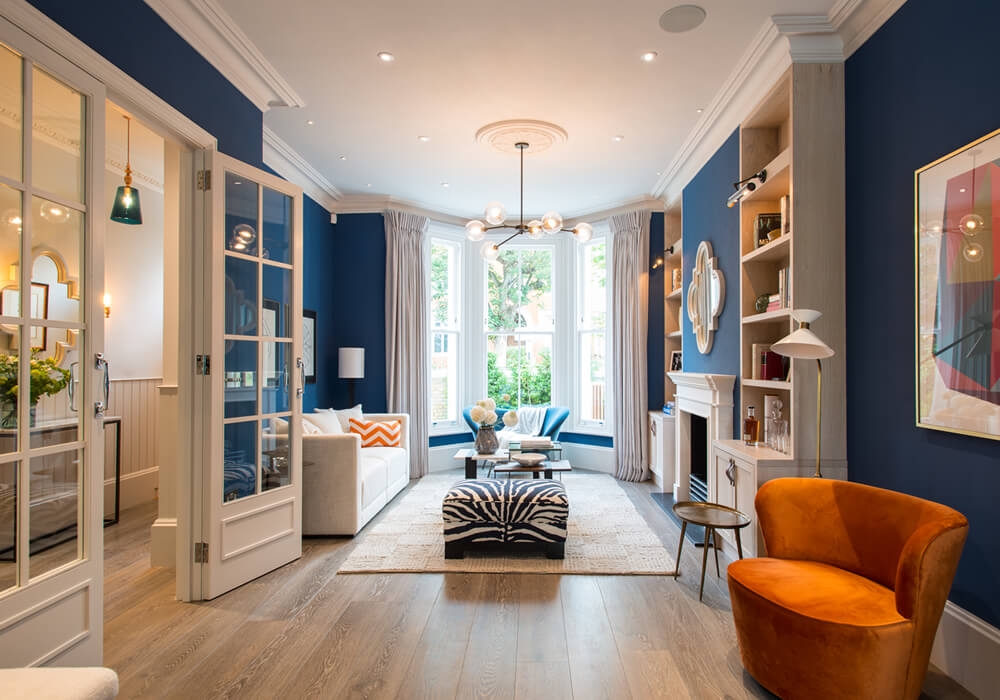
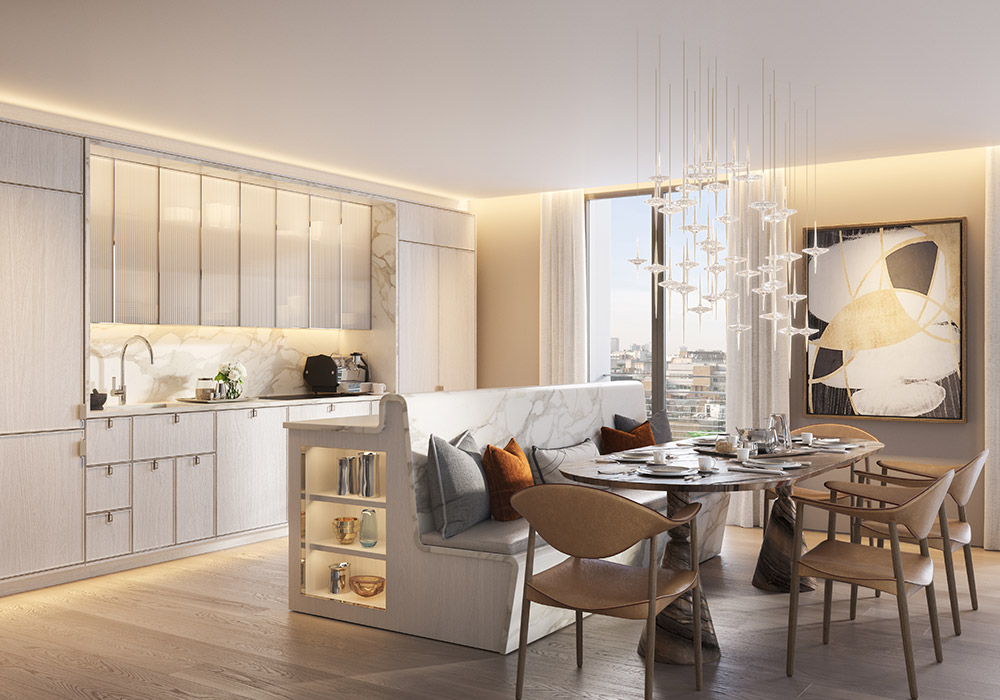
According to benchmark research from luxury agency Beauchamp Estates in its Millionaires Letting in London Survey, average achieved weekly rents for luxury houses and mansions across Prime Central London (PCL) jumped by 67.15% in the first half of 2026, climbing to £4,177 per week—equivalent to £217,204 per year. This marks a dramatic escalation from £2,499 per week during the same period in 2025 and £2,715 per week in 2024.
Luxury apartments and penthouses also recorded healthy gains, with average achieved rents climbing 15.12% to £1,957 per week (£101,764 annually), up from £1,700 per week in 2025.
7 in 10 ultra-wealthy now choose to rent
A central finding of the survey highlights a major behavioural transition among high-net-worth individuals: seven in ten ultra-prime households in London now choose to rent rather than buy.
Rather than committing balance sheets to capital acquisitions amid shifting non-dom regulations and stamp duty surcharges, global families are opting for multi-year corporate or private tenancy agreements spanning one to three years. This provides absolute flexibility while maintaining a premier footprint in the capital.
Top-tier headline leases closed in the first six months of 2026 demonstrate the scale of capital deploying into prime rentals:
- Mount Street, Mayfair: A private residence let for £33,000 per week.
- One Hyde Park, Knightsbridge: An ultra-prime lateral apartment agreed at £32,500 per week.
- Cheyne Walk, Chelsea: A historic riverside townhouse secured at £30,000 per week.
- Notting Hill: An architecturally restored family townhouse achieving £25,000 per week.
Demand has been heavily supported by foreign capital inflows, with applicant inquiries from the Middle East rising by 30%, American applicants up 20%, and Chinese demand climbing by 5% over the previous year.
Supply deficits drive the 67% arithmetic
While average pricing metrics have soared, overall market volume reveals an acute supply squeeze.
Across PCL, only 1,911 lettings above £1,000 per week were completed during H1 2026—a 44.48% drop compared to 3,442 deals during H1 2025 and 3,814 in H1 2024. In total, these premium lettings generated £109.2 million in rental income, compared with £177.6 million in H1 2025.
The disproportionate 67% jump in average house rents reflects two compounding market realities:
1. Regulatory adjustments, including the Renters’ Rights framework and property tax pressures, have led individual buy-to-let owners to withdraw properties from the market.
2. The share of rental transactions above £3,000 per week expanded from 18% in 2025 to almost 22% in 2026. Furthermore, properties commanding more than £5,000 per week accounted for £24.09 million—equal to 22% of all PCL rental revenue generated during the half.
Landlords with turnkey assets hold all the cards
For landlords possessing high-specification, professionally managed properties in prime locations, market conditions could scarcely be more favourable. Landlords offering immaculate, turn-key residences benefit from record values alongside virtually zero void periods.
With London remaining a premier global hub for international business, education, and culture, the luxury rental sector is functioning not just as a temporary stopgap, but as the asset class of choice for the world's most mobile wealth.
Receive a print copy of Abode2, or subscribe to our digital or print editions here.

Categories
Property Of The Week
-
 Property Of The Week: A Botanical Grandeur At Acacia, Al Barari
12.10.26
Property Of The Week: A Botanical Grandeur At Acacia, Al Barari
12.10.26
- Property Of The Week: The Crown Duplex Penthouse At 100 George Street W1 07.10.26
- Property Of The Week: Modern Architectural Drama In The Heart Of Marylebone 28.09.26



Abode Affiliates































































































































































































COPYRIGHT © Abode2 2012-2026