
the No1 Google Ranking Luxury Property Magazine
Tax Havens And Eco-Luxury: What’s Driving Europe’s Property Market?
20.07.26Moving past the volatile interest rate cycles that characterised the early 2020s, the continental market is being propelled forward by an institutional shift toward sustainable architecture, the expansion of branded residences, and digital asset integration.
According to a comprehensive pan-European market analysis by Mordor Intelligence, the European luxury real estate sector is projected to reach a valuation of approximately $644 billion, growing at a steady compound annual growth rate (CAGR) of close to 5% through the end of the decade. The traditional definition of a luxury asset is being entirely rewritten by a younger, hyper-mobile demographic of international buyers who view prime property through the lens of a "smart legacy investment"—treating a home as an inflation-resistant wealth vault.
The non-dom flight and the new tax safe-havens
A significant driver behind the current reshuffling of European wealth is the legal and tax restructuring occurring across the English Channel. The total abolition of the United Kingdom’s long-standing non-domiciled tax regime has triggered meaningful wealth outflows from London. This mobile capital is actively migrating to Continental Europe, with three specific nations acting as the primary beneficiaries:
Italy
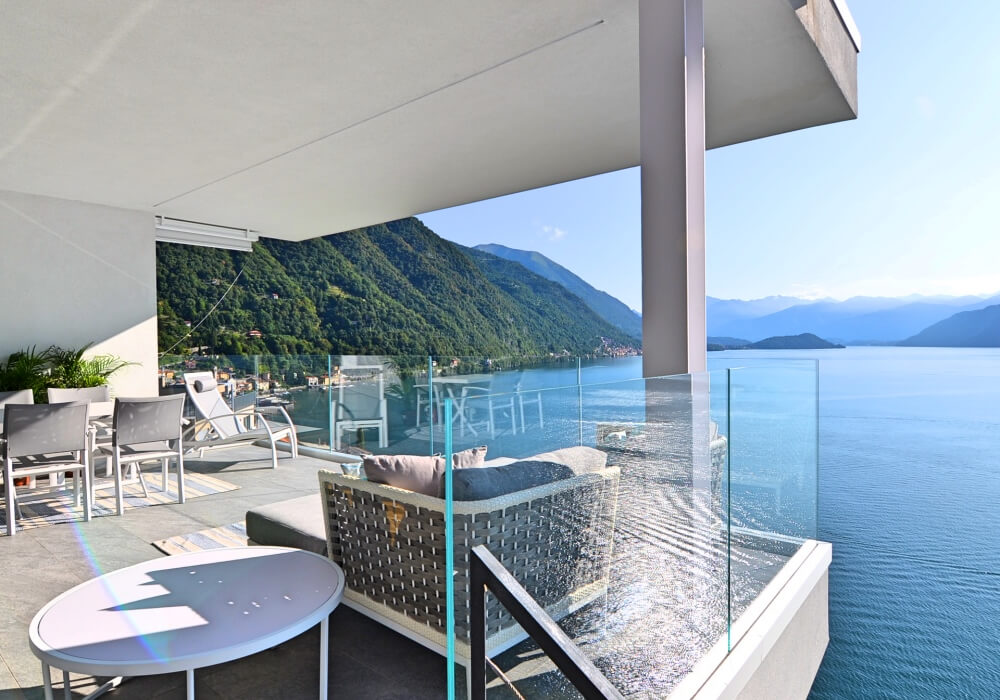
Swiftly becoming Europe's premier tax-led magnet. Its generous, predictable nationwide flat-tax regime for wealthy foreign residents has caused prime transaction volumes to skyrocket in cultural anchors like Florence and Milan.
Switzerland
Retaining its iron-clad reputation for political stability. Data from UBS Global Wealth Management reveals that Swiss mountain luxury properties are now roughly 40% more expensive than they were five years ago. High-altitude enclaves like St. Moritz, Gstaad, and Verbier are routinely commanding average prices of $60,000 per square meter, with ultra-prime micro-locations occasionally breaking into six-figure territory.
Monaco & The French Riviera
With physical space in the Principality reaching historical pricing ceilings and absolute inventory exhaustion, a powerful wealth spillover has intensified demand for grand waterfront estates along the neighbouring French Riviera.
Further south, the Iberian Peninsula has officially come of age.
Spain and Portugal are delivering some of the continent's most robust pricing gains, heavily supported by an influx of capital from Northern Europe, the United States, and Latin America. While coastal hubs like Marbella and Lisbon capture headlines, buyers are no longer hunting for traditional holiday homes; they are demanding year-round infrastructure built to institutional standards.
This structural shift has firmly established ESG (Environmental, Social, and Governance) compliance and wellness engineering as mandatory baselines for prime developers. Data from Savills highlights that prime European properties featuring timeless, sustainable architecture and durable local materials outperform trend-driven homes by up to 12% over a ten-year holding period.
As central banks selectively ease interest rates and stabilising inflation supports real household incomes across the Eurozone, the capital that paused over the last 24 months is confidently returning.

Categories
Property Of The Week
-
 Property Of The Week: A Botanical Grandeur At Acacia, Al Barari
12.10.26
Property Of The Week: A Botanical Grandeur At Acacia, Al Barari
12.10.26
- Property Of The Week: The Crown Duplex Penthouse At 100 George Street W1 07.10.26
- Property Of The Week: Modern Architectural Drama In The Heart Of Marylebone 28.09.26



Abode Affiliates
































































































































































































COPYRIGHT © Abode2 2012-2026