
the No1 Google Ranking Luxury Property Magazine
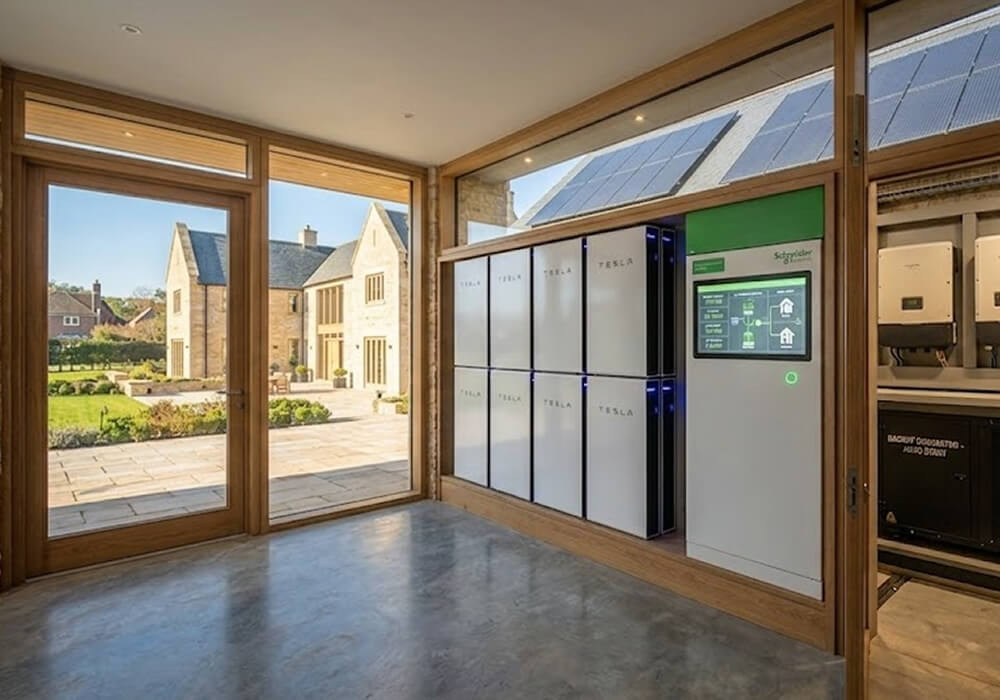
Protecting Prime Property Assets Amidst The UK’s Energy Crisis
31.03.26For decades, the "luxury" tag in UK real estate was defined by square footage, exclusive postcodes, and the provenance of Italian marble. But as we approach Q3 2026, a new metric is quietly redefining the top tier of the property market: energy autonomy.
The latest reports from the BBC and Cornwall Insight have sent a ripple through the industry. Forecasts now suggest an 18% surge in energy costs this July, with the price cap expected to rise by approximately £288. While such an increase might not immediately impact the liquidity of a UHNW (Ultra-High-Net-Worth) household, the underlying driver—global wholesale volatility—is creating a seismic shift in how the luxury market values its most prestigious assets.
1. From features to fundamentals: The rise of the green premium
In the current luxury bracket, energy efficiency has transcended the "nice-to-have" ESG tick-box. It has become a fundamental pillar of asset preservation.
As geopolitical tensions continue to bake high costs into the UK grid, high-value estates with poor EPC (Energy Performance Certificate) ratings are becoming increasingly "expensive" to hold. This isn't just about the monthly utility bill; it’s about future-proofing. In 2026, we are seeing the emergence of a "Green Premium" for self-sufficient homes, while inefficient "legacy" mansions face a potential "Brown Discount" in future negotiations.
2. Solar-plus-storage is the new outdoor kitchen
We are witnessing a surge in demand for properties that function as "micro-grids." The modern luxury buyer is no longer satisfied with a standard "smart home"—they demand a resilient home. This shift is changing the architectural language of high-end builds:
- Solar-plus-storage has replaced the outdoor kitchen as the must-have garden installation.
- Geothermal heating (Ground Source Heat Pumps) is now more coveted than traditional underfloor heating.
- Advanced thermal glazing is viewed with the same prestige once reserved for a triple-aspect view.
The ultimate luxury is no longer just comfort; it is the freedom of being entirely decoupled from the instability of global energy markets.
3. Unlocking value in legacy assets
The most significant opportunity—and risk—lies within the UK’s heritage market. Traditional prime properties in London and the Home Counties face a unique structural challenge: maintaining a period aesthetic while achieving 21st-century efficiency.
For savvy investors and developers, the ability to successfully retrofit these "legacy assets" with hidden sustainability tech is where the most substantial value will be unlocked over the next 24 months. A Grade-II listed manor that can run off-grid is arguably the most secure asset in the current economy.

Categories
Property Of The Week
-
 Property Of The Week: The Harpa Estate, Santorini
31.03.26
Property Of The Week: The Harpa Estate, Santorini
31.03.26
- Property Of The Week: Historic Kensington Home Featuring The World’s First Private Passenger Lift 27.03.26
- Property Of The Week: Ultra-Luxe Waterfront Living At The Cove Miami 23.03.26



Abode Affiliates






























































































































































































COPYRIGHT © Abode2 2012-2026