
the No1 Google Ranking Luxury Property Magazine

London Retains Crown As Europe’s Branded Residences Capital
22.10.26London has retained its standing as Europe’s leading metropolitan hub for branded residences, holding 23 schemes across the capital. Yet behind that headline supremacy lies a sector undergoing a structural geographic pivot.
While London represents an overwhelmingly completed, supply-constrained landscape, a powerful wave of future development is gathering momentum across regional UK cities and throughout Southern Europe.
Data from the global market study The Brand Standard highlights a continent dividing along maturity lines. Across Europe, 338 branded residential projects are active or planned—comprising 139 completed developments and 199 in the pipeline. Globally, the asset class has scaled to 1,972 schemes across completed and active pipelines, positioned behind North America (452), MENA (426), and Asia-Pacific (398).
The capital versus the regions: London and Manchester
London’s dominance reflects the deep-rooted maturity of Prime Central London. Of the city's 23 recorded branded residential developments, 21 are already built and fully operational, leaving just two projects in the active delivery pipeline. This tight forward horizon highlights the broader challenges of central London land assembly, stringent planning hurdles, and demanding build economics that have slowed the introduction of large-scale new schemes.
In contrast, the UK’s growth narrative is shifting northward:
- While Manchester currently has no completed branded residences, it holds four projects in the planning and development pipeline—double the future pipeline of London.
- As the UK market diversifies beyond London’s ultra-prime footprint, opportunities are emerging in high-growth regional hubs such as Birmingham, Leeds, Edinburgh, and Brighton.
- Approximately 78% of the UK’s branded stock currently sits in the luxury tier. However, the sector is beginning to expand into the upper-upscale segment, unlocking the appeal of serviced, brand-managed living for broader domestic buyer bases outside London.
Turkey overtakes Europe at sovereign level

At national level, Turkey has surpassed all European competitors to become the continent’s largest country market, totalling 45 branded schemes across operational and planned stages (24 completed, 21 in the pipeline).
Growth is driven by a balanced distribution between urban capital and resort enclaves:
- Istanbul holds 22 branded projects, positioning the metropolis just a single development behind London.
- Bodrum has firmly established itself as a premier luxury retreat, claiming 12 schemes.
- Approximately 80% of Turkey's branded developments are partnered with luxury hotel operators, aligning closely with the global benchmark where 76% of total sector supply remains hospitality-backed.
Marbella’s fashion pivot and Portugal’s coast
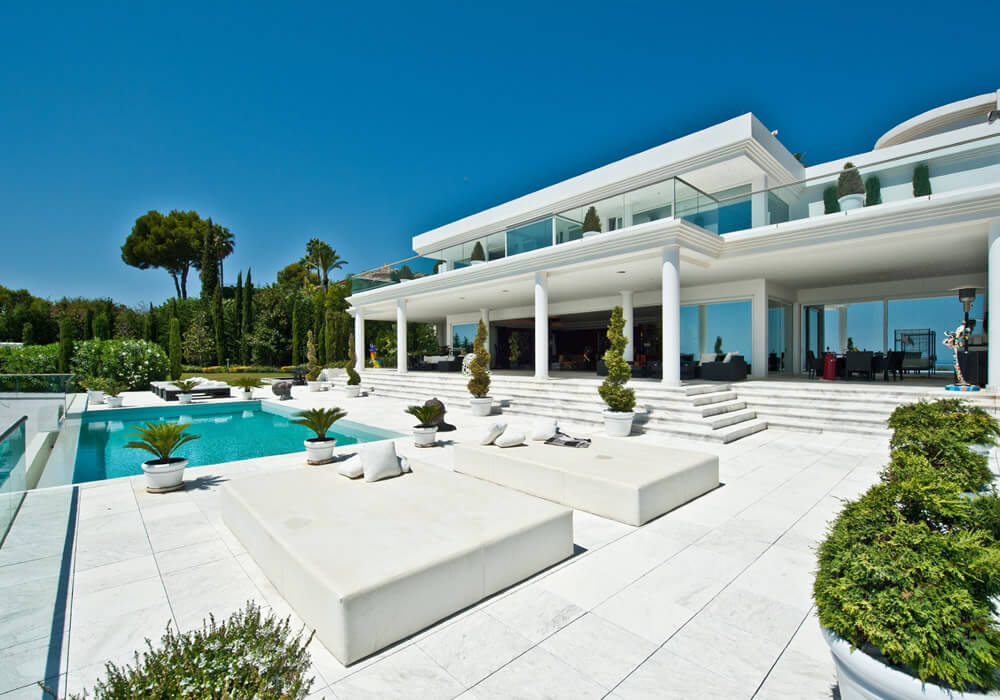
Spain ranks as Europe’s second-largest market with 41 projects. Importantly, 27 of these remain in the pipeline, pointing to substantial inventory delivery in the near term.
Marbella represents the most distinctive sub-market in Spain, holding 11 projects—nine of which are under construction. Departing from traditional hotel operations, Marbella has emerged as Europe’s clear testbed for non-hotel brand partnerships. Non-hotel marques account for 64% of Marbella's footprint, driven by fashion, design, and automotive heavyweights including Dolce & Gabbana, Fendi Casa, Karl Lagerfeld, Pininfarina, Versace Home, and Bentley.
Portugal follows closely with 38 developments, evenly divided between 19 operational and 19 pipeline schemes. Unlike the lifestyle and fashion orientation of southern Spain, the Portuguese market remains 76% hotel-managed, with development focused across Lisbon, the Algarve, and Comporta.
Greece: The fastest developing Pipeline
Greece represents a smaller baseline but one of the steepest forward growth trajectories in Southern Europe. Of the nation’s 23 recorded schemes, only four are currently completed, with 19 projects advancing through the pipeline.
Development is split between urban regeneration in Athens and established resort destinations such as Porto Heli, Crete, and the Cycladic islands. With hotel flags accounting for 87% of all Greek schemes, the asset class remains tightly integrated into the country’s luxury tourism infrastructure.
Across Europe, the branded residence model is transitioning away from being purely an ultra-prime London phenomenon, evolving into a multifaceted asset class defining prime coastal resorts and regional metropolitan skylines alike.
Receive a print copy of Abode2, or subscribe to our digital or print editions here.

Categories
Property Of The Week
-
 Property Of The Week: Jane Austen-Inspired ‘Netherfield’ Apartment Listed For Sale
11.11.26
- Property Of The Week: Villa Wilma, A Landmark Waterfront Estate On Lake Geneva 09.11.26
- Property Of The Week: Coastal Modernism At Seaside Plaza, Fontvieille 28.10.26



Abode Affiliates























































































































































































COPYRIGHT © Abode2 2012-2026