
the No1 Google Ranking Luxury Property Magazine
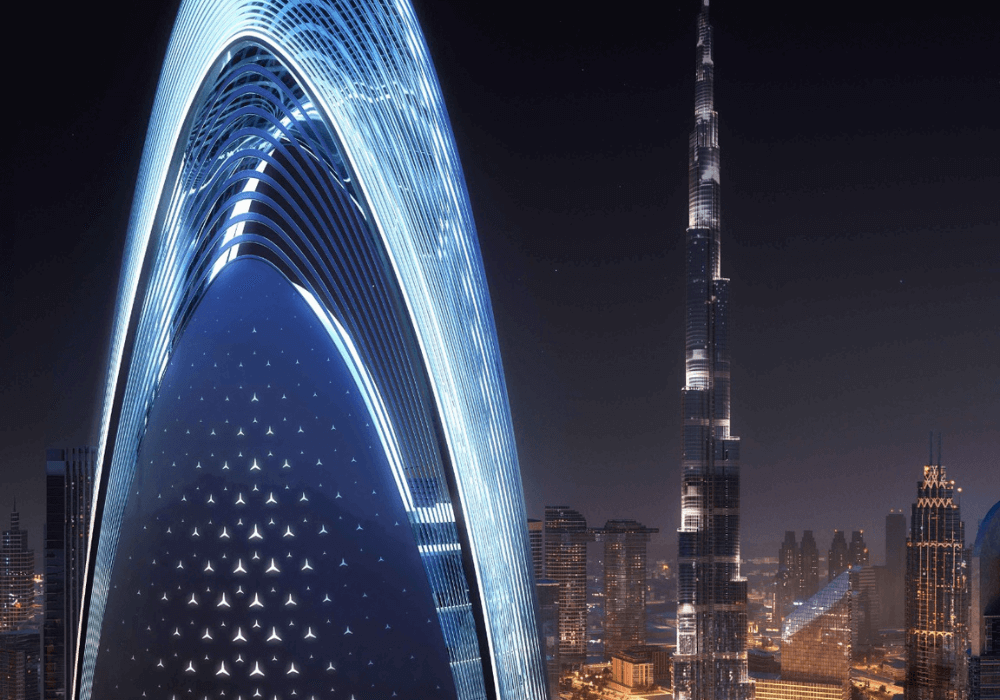
Dubai’s “Safe Haven” Status Just Passed Its Hardest Test
05.03.26The high-stakes world of global real estate has always been susceptible to the tremors of geopolitics, and as the dust settles on the recent escalations in the Middle East, all eyes have turned to the UAE.
For decades, Dubai and Abu Dhabi have sold a vision of "active neutrality"—the idea that while the neighbourhood might be in flux, the Emirates remain an untouchable sanctuary of glass, steel, and capital.
In early March 2026, that narrative faced its most rigorous psychological test yet. But while headlines speculated on a "reckoning" for the Gulf's property boom, the actual data emerging from the Dubai Land Department told a story not of retreat, but of a massive, calculated consolidation.
The AED 2.46 billion rebuttal
On Monday, March 2, as international markets braced for volatility, Dubai’s real estate sector staged a remarkable display of liquid strength. Official figures confirmed that 874 transactions were recorded in a single day, with a total value of AED 2.46 billion ($670 million). To put that into perspective: in the middle of a regional crisis, the city was moving over half a billion dollars of property every twenty-four hours.
This surge wasn’t a fluke of panic selling; it was a "flight to safety" in its purest form. Industry veterans observed that while the retail market might have felt a brief, sentiment-driven pause over the preceding weekend, the institutional and ultra-high-net-worth (UHNW) segments reacted by doubling down. For the world’s "smart money," the UAE isn't just a place to live; it has become a "hard currency" asset class.
From momentum to maturity
The 2026 market is no longer the Wild West of speculative flipping that characterised the post-pandemic era. We are witnessing a transition from a "frenzy" to a "logic-based" cycle. The record-breaking transactions of early March highlight a critical shift: buyers are moving away from speculative off-plan gambles and toward ready-to-move-in luxury assets.
In exclusive enclaves like Jumeirah Bay Island and Saadiyat Island, the "Safe Haven" status is being reinforced by scarcity. When the global climate feels unpredictable, a finished villa in a tax-neutral, high-security jurisdiction becomes more than a home—it becomes a strategic hedge. This is further bolstered by the fact that nearly 60% of these transactions are cash-based, insulating the UAE’s luxury tier from the high-interest-rate traps currently suffocating property markets in London and New York.
UAE shows resilience
The resilience of the UAE doesn't just rest on its skyscrapers, but on its institutional "moats." The Golden Visa program, which has now anchored over 150,000 residents to the soil, has turned a transient investor base into a long-term stakeholder community. These residents aren't looking to exit at the first sign of trouble; they are looking to protect the lifestyle and infrastructure they have integrated into.
As we move deeper into 2026, the data suggests that regional tension acts as a filter rather than a barrier. It filters out the speculative "noise" and leaves behind a market defined by quality, transparency, and unprecedented liquidity. If the AED 2.46 billion single-day total proves anything, it’s that in an increasingly fragmented world, the UAE’s promise of stability is no longer just a marketing slogan—it is a multi-billion dollar reality.
Explore the latest luxury property at Abode2, the leading luxury property magazine.

Categories
Property Of The Week
-
 Property Of The Week: $45M French Riviera Penthouse With Historic Kennedy Dynasty Ties
22.10.26
Property Of The Week: $45M French Riviera Penthouse With Historic Kennedy Dynasty Ties
22.10.26
- Property Of The Week: A Botanical Grandeur At Acacia, Al Barari 12.10.26
- Property Of The Week: The Crown Duplex Penthouse At 100 George Street W1 07.10.26



Abode Affiliates

























































































































































































COPYRIGHT © Abode2 2012-2026