
the No1 Google Ranking Luxury Property Magazine

British Lead The Charge As Foreign Capital Fuels Spain’s Luxury Property Boom
17.08.26British buyers and international investors are cementing Spain’s reputation as one of the world's most resilient playgrounds for high-net-worth real estate.
According to a report by the Majorca Daily Bulletin, based on the 2026 Report on the Luxury Housing Market in Spain commissioned by specialist insurer Hiscox from consultancy Catella, overseas buyers now account for a staggering 60% of total demand in the country’s ultra-luxury residential sector.
Despite broader macroeconomic headwinds and regional shifts in property legislation, demand from high-net-worth foreign purchasers has pushed luxury market prices up by 30% over the past five years. Non-resident international buyers are consistently paying the highest prices per square metre across the country, driven by an appetite for turnkey, prime coastal estates.
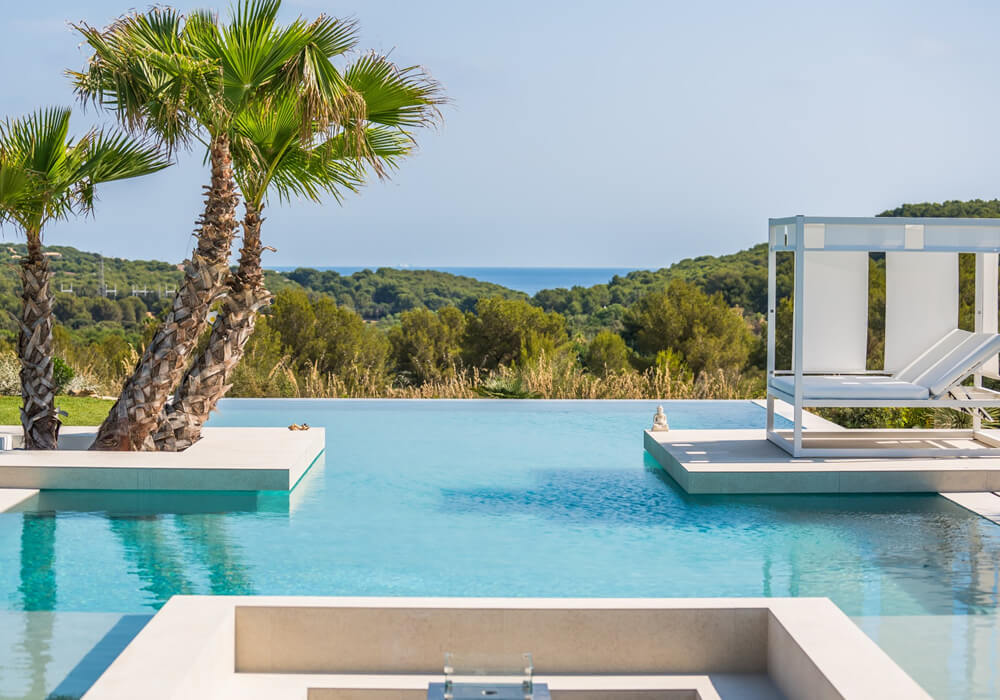
British buyers are dominating overseas transactions
Leading this wave of overseas investment are British nationals, who continue to rank as the single largest foreign buyer group in Spanish real estate. While domestic sales have shown signs of cooling in select sectors, cross-border appetite remains exceptionally strong, with UK purchasers leading transaction volumes alongside buyers from the Netherlands and Germany.
The sheer volume of British capital flowing into the Mediterranean highlights enduring confidence in Spain's prime micro-markets. Rather than seeking entry-level holiday lets, British high-net-worth families, entrepreneurs, and retirees are actively deploying substantial wealth into trophy assets, multi-generational estates, and prime waterfront villas.
Coastal dominance vs. urban enclaves
The Hiscox-Catella findings reveal that 83% of all Spanish properties valued over €3 million are concentrated in just four key regions: the Balearic Islands, Málaga (Costa del Sol), Madrid, and Barcelona.
However, the presence of foreign buyers varies dramatically between major cities and coastal retreats:
- International buyers make up an astonishing 79% of all luxury purchases in Andratx (Mallorca) and 84% in Benahavís (Málaga). In these coastal prime markets, foreign capital completely dictates pricing dynamics and developer supply pipelines.
- In contrast, Madrid remains driven predominantly by domestic wealth, with foreign buyers accounting for only 14% of luxury acquisitions in the city centre and 17% in high-end suburban municipalities such as Alcobendas.
The impact of Golden Visa changes
The market data also addresses the recent phase-out of Spain’s real estate-based Golden Visa scheme, confirming that the policy shift has had a "virtually negligible" impact on the high-end market. Golden Visa acquisitions historically accounted for barely 0.5% of overall transactions across the country.
Because the luxury segment is populated by ultra-high-net-worth buyers transacting far above the former €500,000 residency threshold, purchases continue to be motivated primarily by quality of life, fiscal predictability, top-tier international schooling, and long-term capital preservation.
With British and European demand continuing to drive prime coastal values upward, Spain’s luxury housing market remains one of the premier targets for global real estate investment.

Categories
Property Of The Week
-
 Property Of The Week: A Secluded Traditional Villa In Sant Jordi, Ibiza
03.09.26
Property Of The Week: A Secluded Traditional Villa In Sant Jordi, Ibiza
03.09.26
- Property Of The Week: Historic 66-Hectare Wine & Olive Estate, San Gimignano 27.08.26
- Property Of The Week: Casa Arabella – An Authentic Family Home Near Santa Eulalia 17.08.26



Abode Affiliates

























































































































































































COPYRIGHT © Abode2 2012-2026