
the No1 Google Ranking Luxury Property Magazine

€1M No Longer Buys the Average Home Across Madrid’s Prime Hubs
22.10.26For decades, the seven-figure benchmark represented an entry point into prime Madrid property. Today, that financial yardstick is changing.
According to the latest residential study by DIZA Market—directed by Universidad Rey Juan Carlos professors Dr. María Luisa Medrano and Dr. Fernando Pinto—a fixed €1 million nominal sum no longer covers the acquisition of an average residence in 11 of Madrid’s 20 benchmark prime zones.
The report charts a classic cycle of tightening supply, escalating square-metre values, and contracting transaction volumes across the Spanish capital, reflecting a broader European trend where cross-border private wealth continues to reshape top-tier metropolitan pricing.
Values climb as liquidity tightens
Average prices per square metre increased across 18 of the 20 monitored zones, posting a mean quarterly uptick of 3.0% between the second and third quarters of 2026 and an annual gain of 9.1% since the fourth quarter of 2025.
Concurrently, transactional volume decelerated. Transaction figures dropped across 19 of the 20 benchmark areas, averaging an 8.5% quarterly contraction. Across the broader territorial aggregate, total recorded deals reached 41,856—representing a 3.4% dip between quarters and an 11.2% reduction compared to late 2025.
The dynamic illustrates an increasingly selective, inventory-constrained marketplace. While high borrowing costs have tempered middle-market velocity, the upper-tier residential segment remains underpinned by equity-rich domestic buyers and sustained international capital inflows, primarily from Latin America and Northern Europe.
The erosion of purchasing power: The IAR Metric

To track the real impact of price inflation, DIZA utilises the Real Purchasing Power Index (IAR), which calculates how many typical homes a fixed €1 million nominal capital allocation can purchase within a given district.
The longitudinal findings reveal a steep erosion:
- In 2014, €1 million secured an average of 2.88 typical homes across Madrid’s prime districts. By the third quarter of 2026, that figure collapsed to 1.12 homes—a purchasing power decline of approximately 61%.
- Eleven areas now record an average transaction value exceeding €1 million, up from nine in the previous update.
- The affluent enclave Pozuelo de Alarcón crossed the million-euro mark at municipal level for the first time on record, registering an average transaction value of €1,003,354.
- La Moraleja remains Madrid's most capital-intensive district, posting the market's lowest purchasing index at 0.416 alongside a commanding average transaction value of €2,401,906.
Central investment vs. metropolitan living
The study highlights a clear operational divide between central urban districts and the outer suburban corridors.
Central Madrid
Prime urban districts continue to be propelled by investment-led demand, characterised by cash buyers targeting turnkey lateral apartments for wealth preservation, pied-à-terre use, and premium rental yields.
The Outer Metropolitan Belt
Suburban districts are governed primarily by owner-occupier residential demand, where families seek lateral villas, private gardens, and proximity to international schools.
The Boadilla del Monte Outlier
In stark contrast to the wider regional deceleration, Boadilla del Monte emerged as the sole core district to achieve positive transaction growth, expanding by 15.8% quarter-on-quarter. Newly built schemes accounted for 29.9% of all transactions in the municipality, demonstrating that fresh, energy-efficient housing stock can consistently counter broader market slowdowns.

Categories
Property Of The Week
-
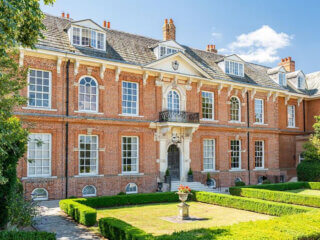 Property Of The Week: Jane Austen-Inspired ‘Netherfield’ Apartment Listed For Sale
11.11.26
- Property Of The Week: Villa Wilma, A Landmark Waterfront Estate On Lake Geneva 09.11.26
- Property Of The Week: Coastal Modernism At Seaside Plaza, Fontvieille 28.10.26



Abode Affiliates






























































































































































































COPYRIGHT © Abode2 2012-2026